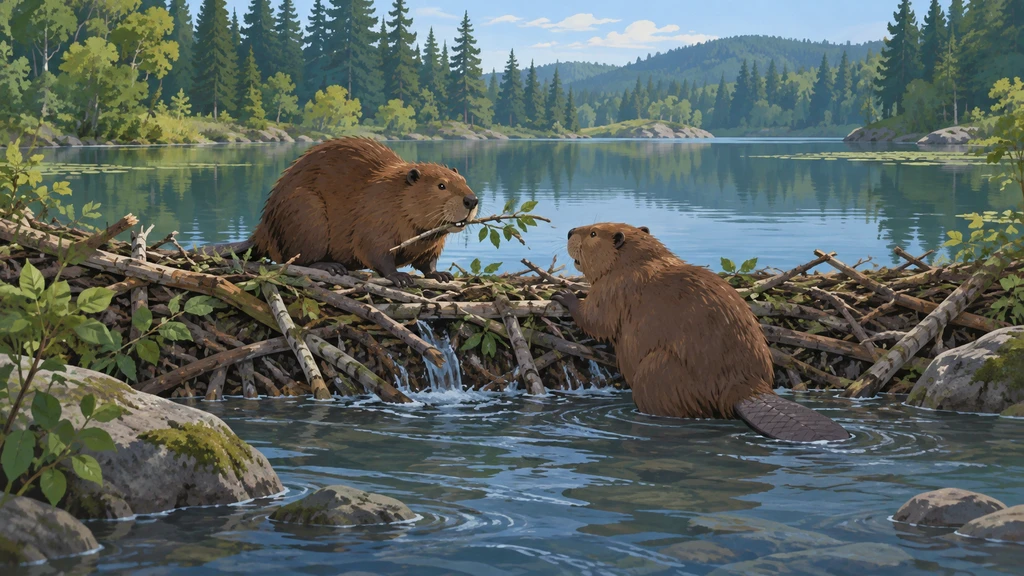
A beaver’s teeth belong to its phenotype. So does its dam, argues Richard Dawkins in The Extended Phenotype. The teeth are easy enough to accept. The pile of branches takes a little more getting used to: it sits outside the animal, yet it can still belong in an account of what the animal’s genes do.
The connection runs through behaviour. Genetic differences can influence how beavers build, which can affect their dams and the ponds those dams create. If those effects help the relevant genes reach later generations, natural selection can favour those genes. The dam becomes part of the explanation of why one genetic variant persists. There need not be a separate gene for each branch, or a construction drawing tucked away in the DNA.
This develops the view of evolution in The Selfish Gene. Once you follow genes through their effects, the edge of a body becomes an awkward place to stop. But there is a limit: changing the surroundings alone does not establish an extended phenotype. In a later clarification, Dawkins insists on the link between differences in genes, differences in their external effects, and selection. The phrase makes a biological claim.
I found this a harder read than The Selfish Gene, but just as fascinating. The beaver example gives that extra effort a concrete subject: a familiar animal, a familiar structure, and a reason to reconsider where we draw the boundary between them.