There’s one number I still half-expect to be a typo.
In 1900, agriculture employed 41% of the U.S. workforce. By 2000 it was down to 1.9%, according to the USDA’s long-run figures. The World Bank, using ILO estimates, puts 2025 near 1.5%.
That number comes back to me whenever people argue about AI and programming. The usual analogy is factory robots and assembly lines. I keep thinking about farming instead.
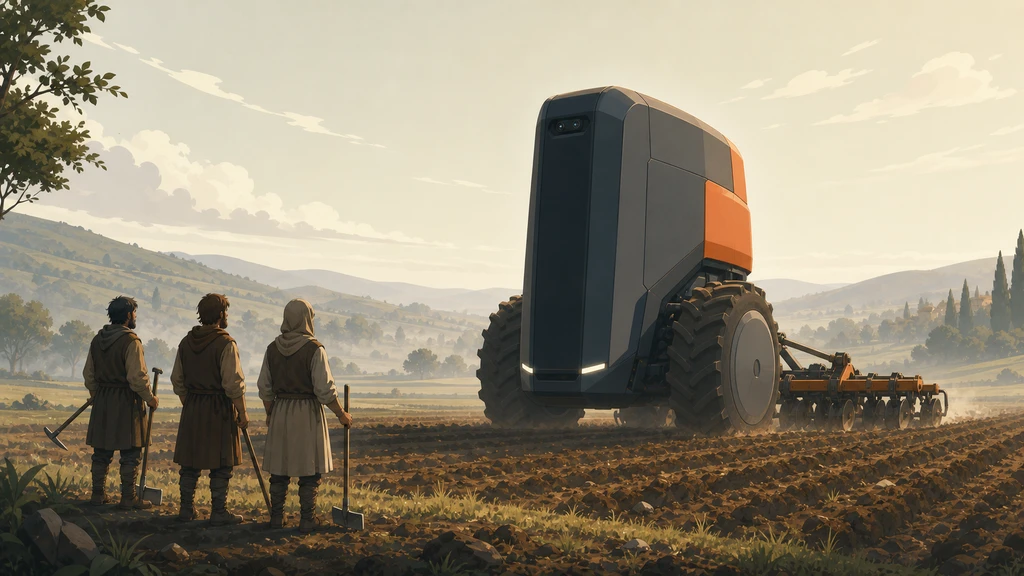
Nobody stopped needing food. We grow more of it than ever, with a fraction of the workers. The effort didn’t disappear; it moved into tractors, fertilizer, irrigation, freight, crop insurance. The farmer is still there. The job just reorganized itself around bigger and bigger machines, until being good at farming mostly meant being good at running them.
Software feels like it’s heading the same way. There won’t be less code. If anything there will be far more of it. But writing each line by hand may stop being the heart of the job, the way working every row by hand stopped being the heart of feeding a country.
I still haven’t learned to feel proud of code I didn’t write myself. But farmers figured this out long ago: their pride is in the harvest, not in having touched every stalk.