Some spoilers for the final part of the novel.
My relationship with Neal Stephenson is a slightly complicated one. I liked Seveneves, and its detailed account of a planetary catastrophe left a fairly permanent impression on me. But there were also stretches where I wanted to interrupt the narrator. The world is falling apart; I’m worried about what happens next, how people will react, what might still be saved. Is this really the moment to spend several pages explaining how a particular piece of equipment works? The engineering might be interesting, but emotionally I was somewhere else.
So I approached Anathem with some caution. Another volume substantial enough to double as a weapon, this time apparently about monks. Not an immediately reassuring combination. Still, my AI assistant had recommended it based on my reading tastes, and I decided to give it a chance. I ended up alternating between the text and the audiobook, taking the story with me on walks and into workouts. Finding enough time to read it became a much greater concern than whether I would finish.
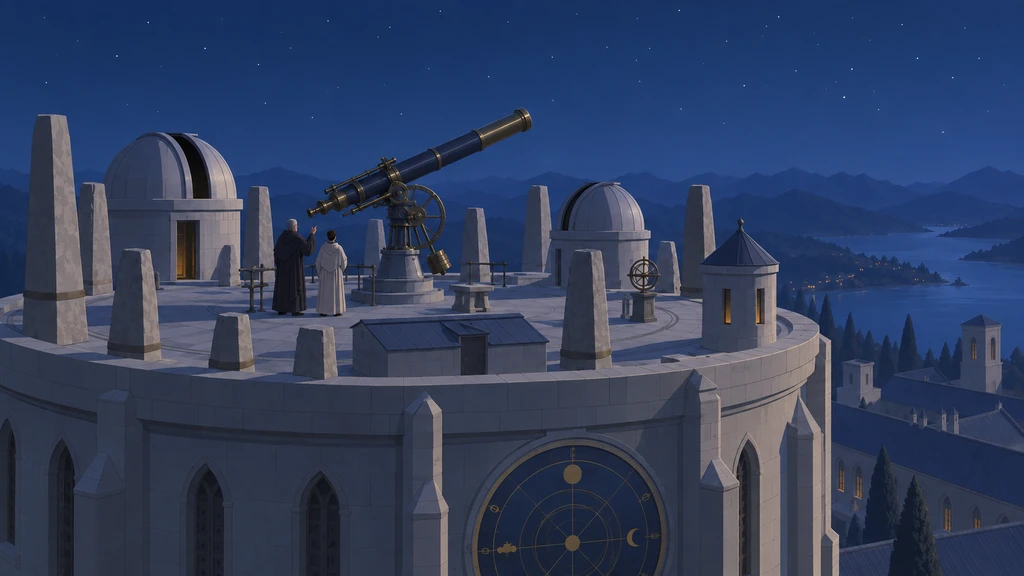
One of the first things that drew me in was the language. Stephenson plays with familiar words and concepts, moving them just far enough from their usual positions that you have to look at them again. I enjoyed the process of recognising something without being able to assume that I already understood it. Gradually, those words reveal a society whose institutions and habits have developed along genuinely different lines. It felt like discovering another world, rather than being introduced to ours with the names replaced.
That unfamiliarity also changed the pace at which I wanted to read. Once I had settled into the lives of people whose separation from the outside world is measured in decades, centuries, even millennia, their long philosophical conversations felt entirely at home. Unlike the technical passages in Seveneves, they rarely pulled me away from what interested me. I was already interested in the conversation. A question would come up, somebody would challenge an answer, and I wanted to follow them further. Even when events became dramatic, the book had established a contemplative rhythm that I was quite happy to inhabit.
What surprised me was how much of that pleasure came from the people having these discussions. They are young, curious, sometimes foolish, and recognisably human. They have friendships, attachments, and small adventures of their own. But they also genuinely enjoy spending time together trying to understand something difficult. A conversation about the nature of reality is a perfectly reasonable way to occupy an afternoon.
I found that enormously appealing. Their curiosity made sense to me, and I liked being in their company. When Erasmas talks with Orolo or argues things through with the others, I don’t feel that the novel is asking me to tolerate a lecture before it returns to the interesting bits. I want to join in. For all its unfamiliar terminology and strange customs, this part of their world felt remarkably welcoming.
There was plenty in those conversations to keep me occupied, too. The idea of a world of ideas, existing independently of the people thinking about it, was especially compelling. So were the questions about different realities and possibilities, which become increasingly difficult to separate from the unfolding story. I enjoyed watching an investigation that begins with something close to youthful mischief gradually acquire consequences far beyond anything the characters initially imagine. And I was moved by the people caught up in it: Orolo’s courage, the tenderness between Erasmas and Ala. My attachment to the book was never purely intellectual.
The last quarter did leave me with some reservations, though. I had grown fond of these characters as ordinary inhabitants of an extraordinary world, and I wasn’t entirely convinced by their eventual promotion to the people who must help save it. Erasmas being beaten up while searching for Orolo felt more believable to me than Erasmas taking part in a mission aboard an alien spacecraft. I would have been happy to follow people living through momentous events, occasionally becoming entangled in them, without their becoming quite so central to the outcome. The ending also felt a little compressed, especially after so much time spent getting comfortable in this world.
But when it was over, what I felt most strongly was that I hadn’t had enough. I still wanted to explore the ideas, revisit the discussions, and spend more time with the questions the book had left behind.
The following day, I was leaving for a festival where I would have no internet. Before going, I asked my AI assistant to put together a large document exploring the philosophical concepts and references it could find in the novel, and saved it for offline reading.
So there I was at the festival, sitting in a tent with rain drumming against the fabric, reading an enormous document about a book I had initially worried would be too much to get through. It was a very pleasant way of not quite leaving.