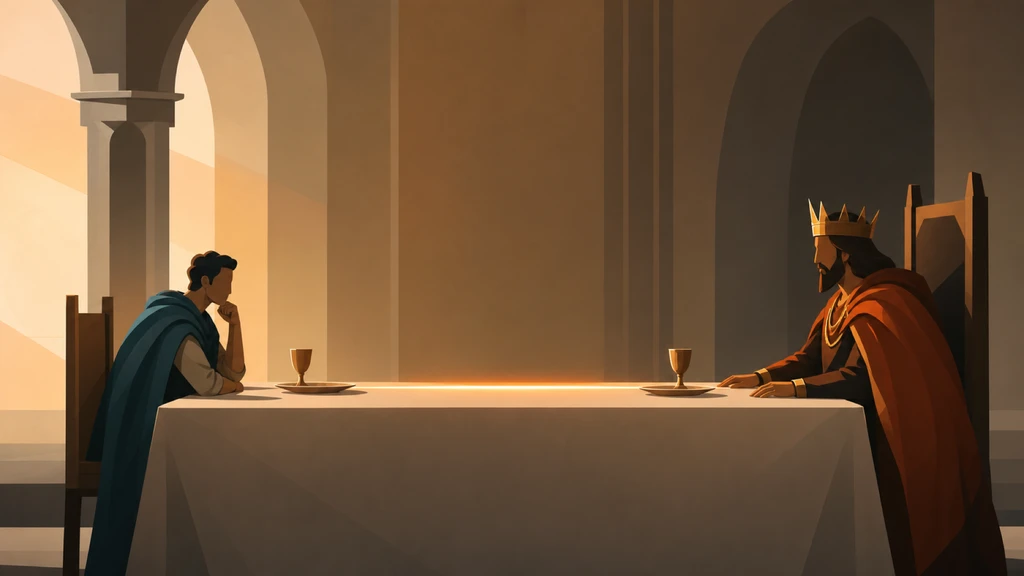
If William of Malmesbury can be trusted, once, when John [John Scotus Eriugena, philosopher, scholastic — note by Astartsky] was dining with him, the king asked: “What separates a Scot from a sot?”, to which John answered: “Only the width of the dinner table!”
A History of Western Philosophy, Bertrand Russell
The 9th century. The king of the Franks, Charles the Bald, decides to make a joke over dinner at the learned Irishman’s expense. A play on words: Scottus (Scot/Irishman) and sottus (fool). “What separates a Scot from a fool?” asks the king, expecting embarrassment.
John, without blinking, points to the table between them. The philosopher has just called the king a fool — and did it so elegantly that the king could only laugh.
Eriugena was a rare person for his time: he knew Greek (almost lost in the West), translated the Neoplatonists, and wrote that reason and faith are not enemies. The Church later condemned his works, but that happened centuries after his death.
Russell uses the story to show that even in the “Dark Ages” there were people with bright minds and sharp tongues. And, apparently, with very thick skin — trolling kings over dinner was an occupation for the brave.