Reading Environment Variables in PHP-FPM

PHP CLI can read environment variables directly, but PHP-FPM intentionally clears worker environments by default. Here is how to pass only the variables your application actually needs.
Loading...
Page 6 of 10
PHP CLI can read environment variables directly, but PHP-FPM intentionally clears worker environments by default. Here is how to pass only the variables your application actually needs.
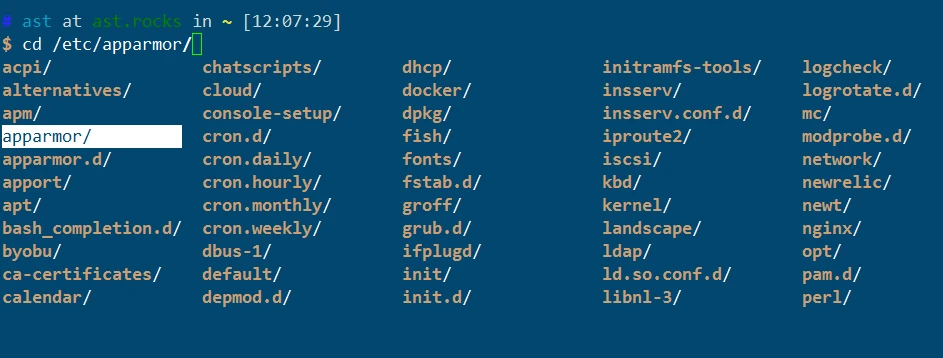
There is nothing more convenient than a good command shell, and zsh is probably one of the best.

Any version control system exists to preserve every project change across its entire history, so a leaked password, token, or key will not disappear by itself. Here is the modern recipe: rotate first, then git filter-repo, then a coordinated cleanup of every copy.

Sometimes you need to keep working on old projects that may use outdated version control systems, such as Mercurial or, God forbid, SVN.

A PHP container needs a database, an address to reach it, and a reason to believe it is ready. Here is a complete local stack that wires those pieces together.
A Docker walkthrough from 2015: building an Ubuntu image with Nginx, PHP-FPM, and supervisor, then starting and entering the container. Preserved as a historical example.
Linux can report “No space left on device” even when df -h shows plenty of free disk space. One common cause is inode exhaustion: the filesystem can still store bytes, but it cannot create more files.

SSI can still be a useful server-side composition seam for legacy migrations, but today it should be treated as a narrow tool with clear boundaries, fallbacks, observability, and trusted upstreams.

NGINX already merges duplicate slashes internally. Changing the browser URL needs a redirect: here is a bounded example that preserves query strings and leaves directories alone.

Suppose a cart request succeeds and its event fires, but the badge stays wrong. Tracing the change shows where an event bus leaves timing and state for us to organise.