At school, geometric theorems absolutely would not yield to me. It was simply beyond my strength to memorize, step by step, a complicated sequence of actions, each of which was no better than the previous ones and in general seemed to have ended up in that place in the algorithm by accident. And why, what for, exactly like that? It was unclear, apart from the fact that five meaningless actions ahead it would produce some result, and another five meaningless actions ahead that result would lead to the solution. But that is not interesting at all; we could not know that! And I was hellishly bored, I yawned, sniffled, drew little devils in my notebook, and steadily got Cs and Ds on tests, desperately trying to prove something on my own in the last fifteen minutes before handing in the paper. No need to guess here: most of the time it turned out to be beyond my strength.
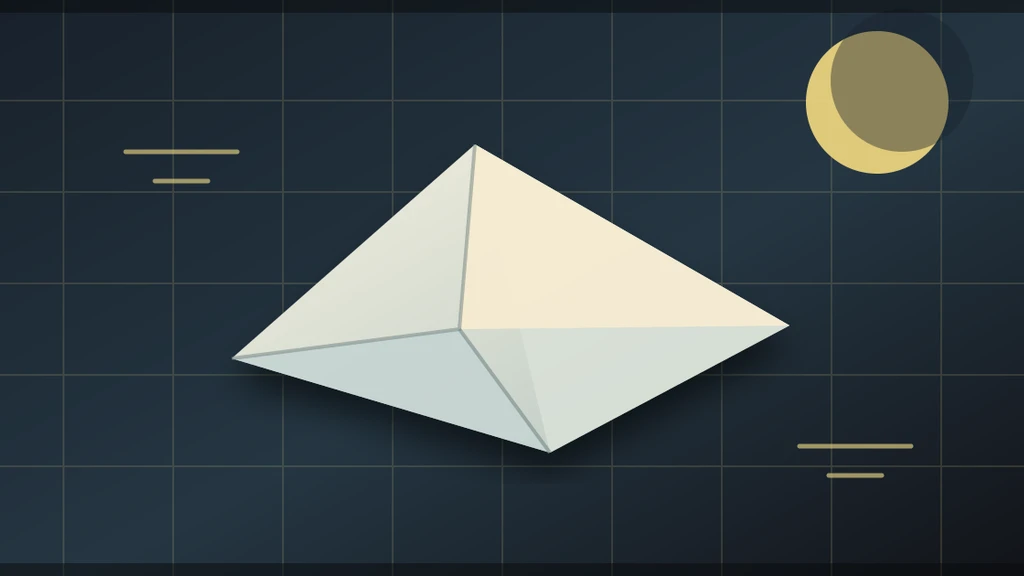
And I remembered the art of origami: you take a simple clean sheet, rectangular like the very concept of rectangularity, turn it, fold it, bend it; all possible actions with it are very simple, and everything that can come out of it is exactly that same sheet. Everything was already in it, after all. And suddenly it turns out not to be a rectangle at all, but a bird. Or a beetle, it does not matter here. What matters is that assembling figures according to other people’s diagrams is, of course, amusing, but nothing more, and in no way lets you sense the form, feel the process, understand origami. It is much more interesting to search for the form yourself, which is what I sometimes liked to do: unfortunately, nothing worthwhile ever came out of it for me, but I got an ocean of pleasure from the metamorphoses of a clean sheet and, before long, could already understand the logic: why and for what reason it had to be folded this way and not another.
For anyone who has not seen it, an interesting article that reminded me of this:
“A Mathematician’s Lament”, Paul Lockhart